
As the demand for sustainable infrastructure grows across Southeast Asia, cooling systems are coming under greater scrutiny for their energy use, environmental impact, and long-term reliability. Developed by Takasago Thermal Engineering in Japan, Green Air® Technology represents an engineering-led approach to air conditioning that addresses these challenges through optimized energy performance, intelligent control, and full-system integration.
Green Air® is not a product or brand label. It is a technical methodology, applied through engineering design and system operation, to reduce excess energy use without compromising environmental quality or operational stability. At T.T.E. Engineering Malaysia, we apply Green Air® principles to help facility owners meet increasingly complex performance, compliance, and sustainability requirements in real-world projects.
A Methodology Grounded in Engineering Logic
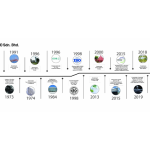
Green Air® Technology was developed by Takasago in response to rising energy costs, tightening environmental regulations, and the need for high-performance systems in commercial and semi-critical facilities. The methodology was first applied in Japan, where building performance standards and refrigerant restrictions required engineering firms to design HVAC systems with greater precision and responsiveness. Over time, Green Air® evolved into a comprehensive approach that balances energy efficiency, system controllability, and future adaptability.
Unlike systems built around fixed schedules or manual control, Green Air® emphasizes responsiveness to actual building demand. Through integrated sensors, adaptive control sequences, and optimized mechanical layouts, the system adjusts air and refrigerant flow in real time. The result is reduced part-load waste, improved thermal consistency, and lower lifecycle energy consumption.
Application in Malaysia’s Climate and Building Sector
In Malaysia, where ambient temperatures and humidity remain high throughout the year, HVAC systems face constant load pressures. This makes part-load efficiency especially critical. Buildings often operate far below their maximum occupancy or equipment load, but many conventional systems run at fixed speeds or inefficient staging, resulting in wasted energy.
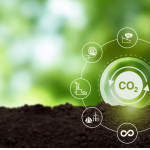
Green Air® addresses this through active airflow management, zone-level control, and equipment selection tailored to local climate behaviour. In commercial facilities, this may include demand-based ventilation that adjusts outdoor air intake based on CO₂ levels or occupancy patterns. In industrial or high-specification environments, temperature and humidity are regulated more precisely, often within narrow tolerances, while still minimizing compressor load and fan power.
T.T.E. Engineering applies Green Air® design logic in projects that require consistent environmental conditions and energy transparency. Systems are typically integrated with a Building Monitoring System that allows facilities personnel to track performance continuously, analyse trends, and respond to deviations early. These features are particularly relevant for clients pursuing GreenRE or GBI certification, where HVAC performance directly impacts overall building scoring.
System Design and Lifecycle Performance
One of the key strengths of Green Air® is its emphasis on system-wide efficiency, not just component performance. The methodology covers load calculation, equipment sizing, duct and pipe routing, refrigerant selection, and control logic. Each element is designed not in isolation, but as part of an interdependent system built for longevity and low total cost of ownership.
In systems designed using Green Air® principles, refrigerants are selected based on both energy efficiency and global warming potential, aligned with Malaysia’s commitment under the Kigali Amendment. Inverter-driven compressors, electronically commutated motors, and variable-air-volume controls are often specified to reduce energy intensity during non-peak hours.
Heat recovery strategies are also frequently employed, especially in facilities with simultaneous cooling and heating demands, such as hospitals, hotels, or manufacturing lines. Waste heat from condensers can be redirected for preheating water or stabilizing supply air temperatures. These measures contribute not only to energy savings but also to more balanced system operation and reduced strain on primary equipment.
Over time, these systems tend to offer improved maintenance visibility, more predictable performance, and fewer unplanned shutdowns. With control platforms collecting and logging operational data, facility teams are able to plan servicing more efficiently and respond to degradation early, supporting both reliability and cost containment.
Supporting Regional Sustainability Goals
Green Air® Technology aligns with key environmental and energy priorities identified in national and regional policy frameworks. In Malaysia, the National Energy Transition Roadmap and the Low Carbon Cities Framework both emphasize energy efficiency in building systems as a means to reduce national emissions intensity.
By focusing on system-level energy optimization, Green Air® supports these objectives with measurable outcomes. Its design methodology reinforces compliance with energy codes and green building standards, while also enabling better refrigerant management in anticipation of future environmental restrictions.
The broader ASEAN region is also moving in this direction. As electricity tariffs increase and sustainability becomes a competitive differentiator in real estate, industrial, and commercial development, engineering-led HVAC strategies are gaining attention. Green Air® offers a practical, technically grounded model for clients looking to adapt to this new landscape without compromising environmental control or operational continuity.
Smarter Cooling Built on Engineering Discipline
At T.T.E. Engineering Malaysia, we adopt Green Air® Technology as part of our commitment to delivering high-performance HVAC systems that meet current and future demands. The methodology supports smarter cooling through data-driven operation, high-efficiency system architecture, and scalable design practices. It enables better decision-making at both design and operational stages, ensuring that systems not only function as intended but also evolve alongside building use and energy expectations.
As Southeast Asia continues to urbanize, cooling systems must do more than maintain comfort. They must reduce energy waste, adapt to variable demand, and support long-term sustainability. Green Air® provides the engineering framework to make that possible.